
“The Shift from Mass Production to HMLV: Why Now?”
What image comes to mind when you think of a “factory”? Most likely, it is a scene of identical products pouring off a massive conveyor belt in a never-ending stream. Much like the iconic scenes from Charlie Chaplin’s Modern Times, manufacturing in the past was a battle of “economies of scale,” where success was defined by how much could be produced at the lowest possible cost.
However, the landscape of the Electronics Manufacturing Services (EMS) industry is undergoing a total transformation. Alongside massive lines churning out millions of smartphones, the ability to agilely produce dozens or even hundreds of different products in small quantities is emerging as the new competitive edge.
The era of High-Mix Low-Volume (HMLV) production has officially arrived.
📈 The Rise of the Long Tail
In the past, a handful of “hit products” dominated the market. Today, however, consumer preferences have become highly fragmented, and with the rapid pace of technological advancement, product lifecycles have become incredibly short. Consider sectors such as medical devices, industrial robots, or aerospace components. These industries do not require tens of millions of units. Instead, they demand extreme precision and high levels of customization tailored to specific client needs. Similarly, for startups launching innovative hardware, small-batch production is essential to test market response during the initial stages.
The market no longer demands a “singular mass”; instead, it craves “diverse multitudes.”
📝 The Critical Hurdles for EMS Providers
From a manufacturer’s perspective, HMLV is not always a welcome guest. In mass production, once a line is set up, it rarely stops, meaning production speed translates directly into revenue. However, in high-mix low-volume production, the key lies in continuous line transitions. After producing 100 units of Product A, the entire line must be halted to prepare for just 50 units of Product B. This results in significant changeover time, during which operators must swap component reels on SMT (Surface Mount Technology) equipment, entirely reprogram the systems, and reset inspection standards. Minimizing the downtime incurred during this process while managing the sheer complexity of materials is the single greatest challenge facing EMS companies today.
🏗️ Advanced Engineering Partnerships
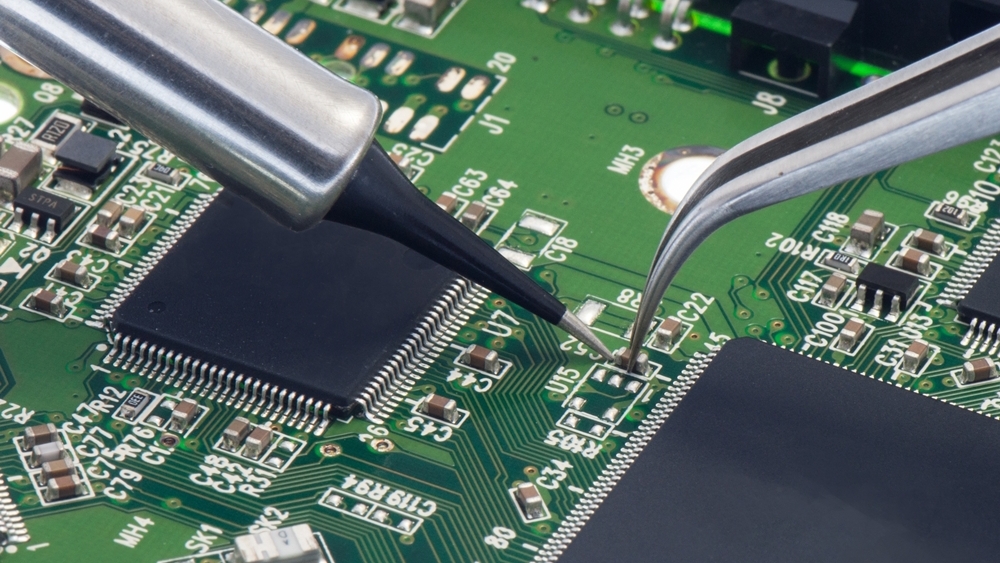
Excelling in High-Mix Low-Volume (HMLV) production means far more than simply “producing in small quantities.” It is a testament to possessing advanced engineering capabilities.
It requires the essential ability to procure and manage thousands of different components with precision and jit (just-in-time) efficiency. Furthermore, it demands the expertise to provide critical feedback during the design phase to optimize manufacturing efficiency (DFM). Today, the role of an EMS provider has evolved: it is no longer just about outsourced production, but about serving as a technical partner that breathes life into innovative ideas.
[Related Posts]
http://www.bkec.co.kr/2026/02/03/ems-solution/
“Flexibility”: The Deciding Factor for the Future of Manufacturing
Of course, mass production will not disappear entirely. However, the importance of High-Mix Low-Volume (HMLV) will only grow, particularly in high-value-added advanced industries. While the past was defined by churning out standardized products, the future of manufacturing depends on how flexibly a provider can meet demanding and sophisticated customer requirements. The new competitive edge in the era of HMLV lies in embracing complexity and systematizing change. As we transition from economies of scale to economies of diversity, let BK Electronics be your partner in HMLV manufacturing.
For any inquiries, please contact us at the details below.
📞 Phone: +82 31-456-2580
📧 Email: bksales00@bkec.co.kr